
Grow It, Share It, Sell It: Turning Your Balcony Garden or Farm Produce Into a Neighbourhood Business
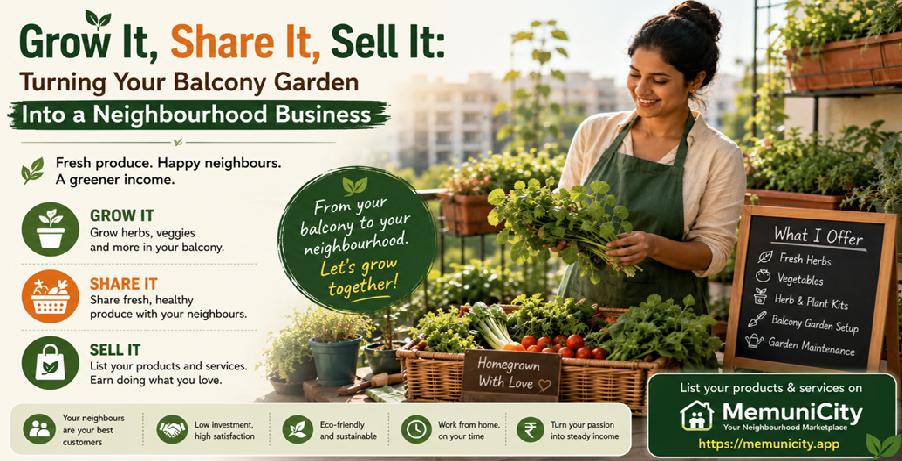
If you've ever had a balcony bursting with tomatoes, curry leaves, or mint that you simply can't finish before it wilts, you already have the seed (pun intended) of a small home business. Urban gardening has quietly become one of the most satisfying — and surprisingly profitable — hobbies to turn into a side income, especially if you live in an apartment complex surrounded by hundreds of potential customers who'd love fresh, homegrown produce but don't have the time, space, or green thumb to grow it themselves.
Here's how to think about it in three layers: growing, selling, and managing gardens for others.
1. Growing: Start With What Thrives, Not What's Trendy
The biggest mistake new balcony gardeners make is trying to grow everything at once. Instead:
- Pick 4-6 reliable performers for your climate and light conditions — herbs (mint, coriander, curry leaves, basil), leafy greens (spinach, methi), and easy fruiting plants (cherry tomatoes, chillies) are forgiving even for beginners.
- Vertical and railing planters maximize a small balcony's yield — you'd be surprised how much you can grow in 15 sq ft with the right containers.
- Compost your kitchen waste — it cuts your input cost to nearly zero and gives you noticeably healthier plants.
- Track your surplus. Once you're consistently harvesting more than your household eats, you've crossed from "hobby" into "inventory."
2. Selling: Your Neighbours Are Your Best First Customers
Homegrown produce has something the supermarket can't replicate: freshness measured in hours, not days, and the story of who grew it. That's a genuinely strong selling point, and you don't need a storefront or delivery van to capture it — you need people within walking distance who already trust you.
This is where selling within your own apartment society or nearby ones works so well. A few ways to get started:
- Put up a note in your building's WhatsApp group or noticeboard when you have surplus.
- Bundle small "herb kits" or "salad boxes" rather than selling loose produce — it's easier to price and feels more like a product.
- Consider a small nursery side-line — saplings, seed-started pots, or repotted cuttings — since many neighbours want to start gardening but don't know where to begin.
If you want something a bit more structured than a WhatsApp post, apartment-society marketplace apps like MemuniCity are built exactly for this kind of hyperlocal selling — you list your produce or plant kits as a listing visible only to your own society (or nearby ones, if you want more reach), buyers pay online, and you get paid directly without chasing anyone for cash. It also handles the basic buyer-seller trust layer (profiles, ratings, a simple pickup/delivery flow), which matters more than people expect once you're selling to more than just the three neighbours you already know.
3. Managing: The Service Nobody's Offering Yet
Here's the part most people miss: not everyone wants to grow their own garden — many just want one. Working professionals, elderly residents, frequent travellers, and anyone who's killed one too many money plants would happily pay someone to set up and maintain a balcony or kitchen garden for them. This is a real, underserved service opportunity in most apartment complexes, and it scales far better than selling produce alone because you're monetizing your knowledge and time, not just your harvest.
What the service actually looks like
a) One-time setup This is the entry point for most clients. You visit their balcony or kitchen window, assess the light, wind, and space, and design a garden suited to it — herbs for a sunny kitchen ledge, shade-tolerant foliage for a north-facing balcony, a compact vegetable patch for someone who wants to eat what they grow. You supply or help source the pots, potting mix, and starter plants, and do the actual planting. Charge a flat fee for this based on scale — a simple 4-6 pot herb setup will cost far less than a full balcony transformation with railing planters, trellises, and a dozen varieties.
b) Recurring maintenance visits This is where the real, steady income lives. Most home gardens fail not at setup but a few weeks in, when watering schedules slip, pests show up, or nobody notices a plant is root-bound. A simple biweekly or weekly visit to water (if they're away), prune, repot as needed, add compost/fertilizer, and treat early signs of pests keeps a garden alive and the client happy — without them lifting a finger. Because the need is ongoing, this naturally works as a subscription rather than a one-off job, which means predictable, recurring income for you instead of chasing a new client every month.
c) Seasonal refresh and troubleshooting Offer an add-on visit each season to swap out plants that won't survive the coming weather (basil struggles in peak summer, for instance) and refresh the look of the garden. You can also offer one-off "SOS" visits for people whose plants are visibly dying and need a diagnosis — yellowing leaves, fungus gnats, wilting — these are quick, high-value visits that often convert into a recurring maintenance client.
How much you can realistically earn
Pricing varies by city and scale, but a useful way to think about it: a setup visit might be priced like a half-day of skilled labour plus materials, while a recurring maintenance visit is priced more like a quick, specialized house-call — low enough that a busy household doesn't think twice, but multiplied across even 8-10 balconies in your own building or the next one over, a few maintenance visits a week adds up to a genuine, steady side income with almost no ongoing cost beyond your time and a basic toolkit (secateurs, a hand trowel, a sprayer, some compost/neem oil).
Getting your first few clients
- Start with your own building. Offer a free or heavily discounted first visit to two or three neighbours whose balconies you already know are struggling — a visibly revived garden a few weeks later is your best advertisement.
- Post before-and-after photos in your building's WhatsApp group or noticeboard — gardens are visual, and transformation photos sell the service better than any description can.
- Bundle it with your produce sales. If you're already selling homegrown herbs or vegetables (see above), mention the setup/maintenance service to the same customers — someone who buys your mint is a natural candidate for "want your own mint plant that never dies? I can set that up."
If you're formalizing this as a proper recurring offering rather than an ad-hoc favour, it's worth listing it as a service with a fixed visit cadence (say, twice a month) so clients subscribe once instead of you negotiating and invoicing every single visit. On MemuniCity, service listings support exactly this: a buyer subscribes once, gets auto-charged automatically each cycle, and you get paid directly without ever sending a payment reminder — which matters a lot once you're juggling maintenance visits across multiple balconies in the same building or across neighbouring societies.
Why Your Own Building Is the Perfect Place to Start
Unlike most small businesses, a garden-based one has almost no cold-start problem when you begin hyperlocally:
- Zero delivery cost — you're handing things over in the same building.
- Built-in trust — neighbours can literally see your balcony from theirs.
- Word-of-mouth travels fast — one satisfied customer in a WhatsApp group of 200 residents is worth more than any ad.
- Low investment — pots, soil, and seeds are cheap; your biggest cost is time.
Start small: sell your surplus this week, offer to set up one neighbour's balcony next month, and let the maintenance subscriptions follow naturally once people see your own garden thriving. Green thumbs are rarer than people think — and in a city full of balconies with no one tending them, that's a genuine business waiting to be grown.
Comments
Sign in to comment.
No comments yet.